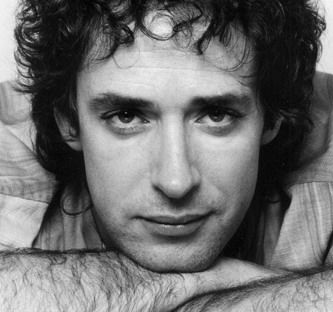
Argentine Gustavo Cerati was an international rock star 15 years before the world heard of Shakira or Juanes. He started in 1982 as the charismatic frontman and songwriter for Soda Stereo, the revered Buenos Aires band widely credited with kicking off rock in Latin America. When Soda broke up in 1997, Cerati went on to a successful solo career.
Last fall, in the wake of Soda's multimillion-selling 2007 reunion tour, he came out with "Fuerza natural" (Natural Force), a reflective, moody, musically rich album that immediately topped Argentina's charts.
We talked with the Latin music idol, who was at home in Buenos Aires.
Q: Is "Fuerza natural" the most successful album you've had as a solo artist?
A: It's a kind of cliche to talk about the latest record as the best one. But the whole process of making this one made me very happy when I was finished. I think I've taken another step forward, and I feel more proud than of other things I've done ... There's a number of things in the themes, the sound and the influences that didn't come out so well in the stuff I did before.
Q: The videos for "Deja vu" and "El rapto" seem like scenes from a road movie. What was the inspiration?
A: One of the ideas we worked with when we were creating the songs was the idea of this trajectory, of moving through nature, going down a road, going from one place to another. There's a little bit of marketing there, saying that you're going to recapture a little of the romanticism of the '70s. The videos are a kind of road movie. It's weird because the story isn't all written yet. I still don't have a good idea of where I am, but I'm arriving somewhere. It's kind of like "Lost."
Q: Why do you think rock 'n' roll came out so strongly in Argentina, before the rest of Latin America?
A: When you talk about Argentina you have to remember that 50 percent of the population is concentrated in Buenos Aires, in a city. And we were in a city that was pretty European, that was looking out from Latin America. Also we had artists like Charly Garcia, Luis Alberto Spinetta, artists who were very much from here, with their own values, their own brilliance. Also, I think it's a kind of special flavor in the Argentine personality, which is pretty chaotic. We're bums. So it's perfect for rock music.
Q: It's a cliche that Argentines are arrogant - are they?
A: Arrogance is not an Argentine invention, that's for sure. The first time Soda Stereo went outside the country to play, we were in Venezuela, and a headline said "Argentine but Decent" and I said, "all right, I see." At the same time, in the last few years we've had so many problems, so much poverty, so much destruction, so much bad management and lack of faith, that when we Argentines look at ourselves we see ourselves suffering just like other countries. We can't be so arrogant anymore.
Q: You've been a star for a long time, first with Soda, and now as a soloist. Can you live a normal life? How do Argentines treat their stars?
A: I am dedicated to what I really like to do, so it doesn't make much difference there, mostly because it's a lot of work. I lose a lot of my private life. But I tell you, I go to the supermarket, I walk on the street. I can't go to places where there's a lot of people together. But I don't live a closed-off paranoid life of a rock star obsessed with his status.
Q: You started in your 20s. What is it like to be a rocker at 50?
A: The energy for me is very similar. I can still go like a kid. On the other hand, I'm 50. There are things that I have to be more careful about. But the benefits of this moment in my life have to do with playing, with seeing what's going on. Before I was like a bullet train. Now I see the big picture more. Also, I have a little more of a sense of humor than I used to have.


No comments:
Post a Comment